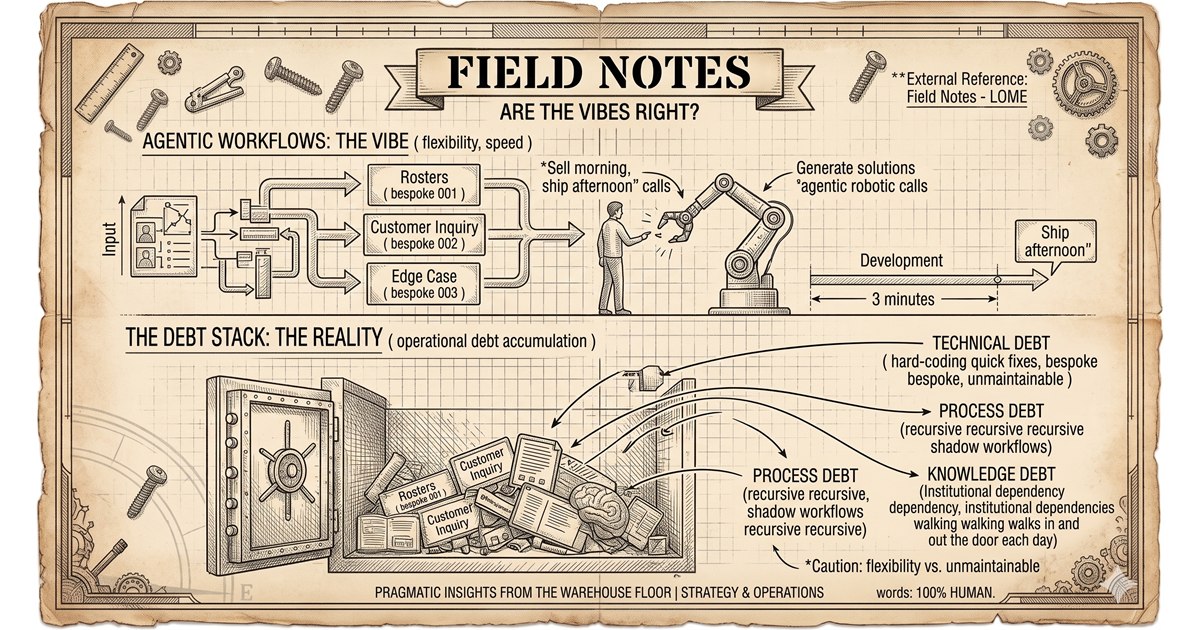
A couple of months ago none of us had heard of "vibe coding," "AI agents," or "agentic workflows." I certainly hadn't. Now they're everywhere, and the pitch is hard to ignore.
Here's the premise as I understand it: instead of a rigid system with rules and processes built up over years, you vibe-code something brand new and let an AI handle everything for you. Every request, every weird-workaround-workflow your team has been quietly running since 2019, every edge case you can dream up. Managed perfectly, first time, every time.
If I had to analogise it, we're going from Bill Gates' "use this system or go to hell" to a more Oprah-like "everyone gets a system!", where no workflow is too unique for your AI-powered operating system to handle agentically.
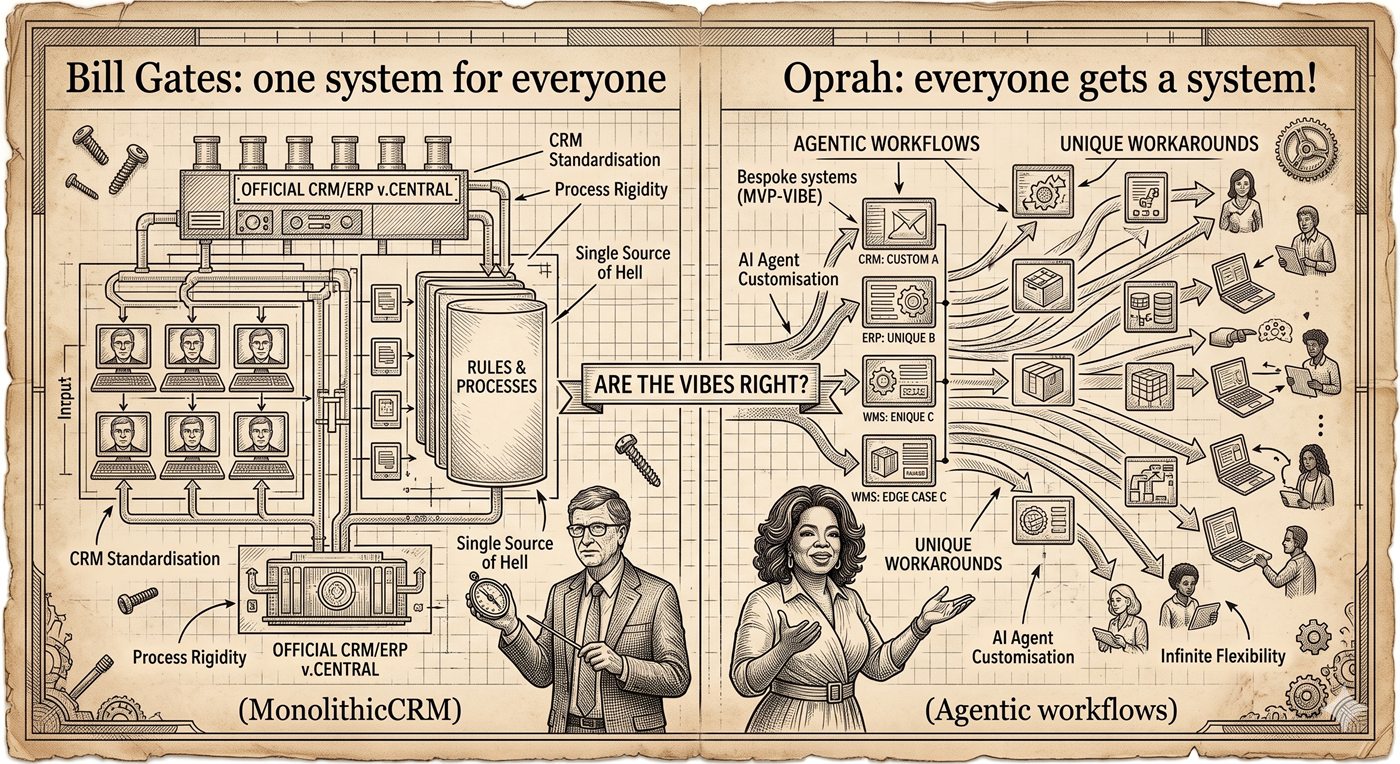
The sales pitch is hard to dismiss. Why wouldn't you want a bespoke system for each of your customers? You could handle them in any way your imagination can conjure (or whatever the sales guy spits out at a coffee meeting), build prototypes on the spot, never say no to a request, and squash development lead times to a fraction.
Sell in the morning, build by lunch, ship before tea; the only constraint being whatever fits on the café napkin.
It sounds exciting.
It also sounds like poor system architecture dressed up as a solution to something more fundamentally broken.
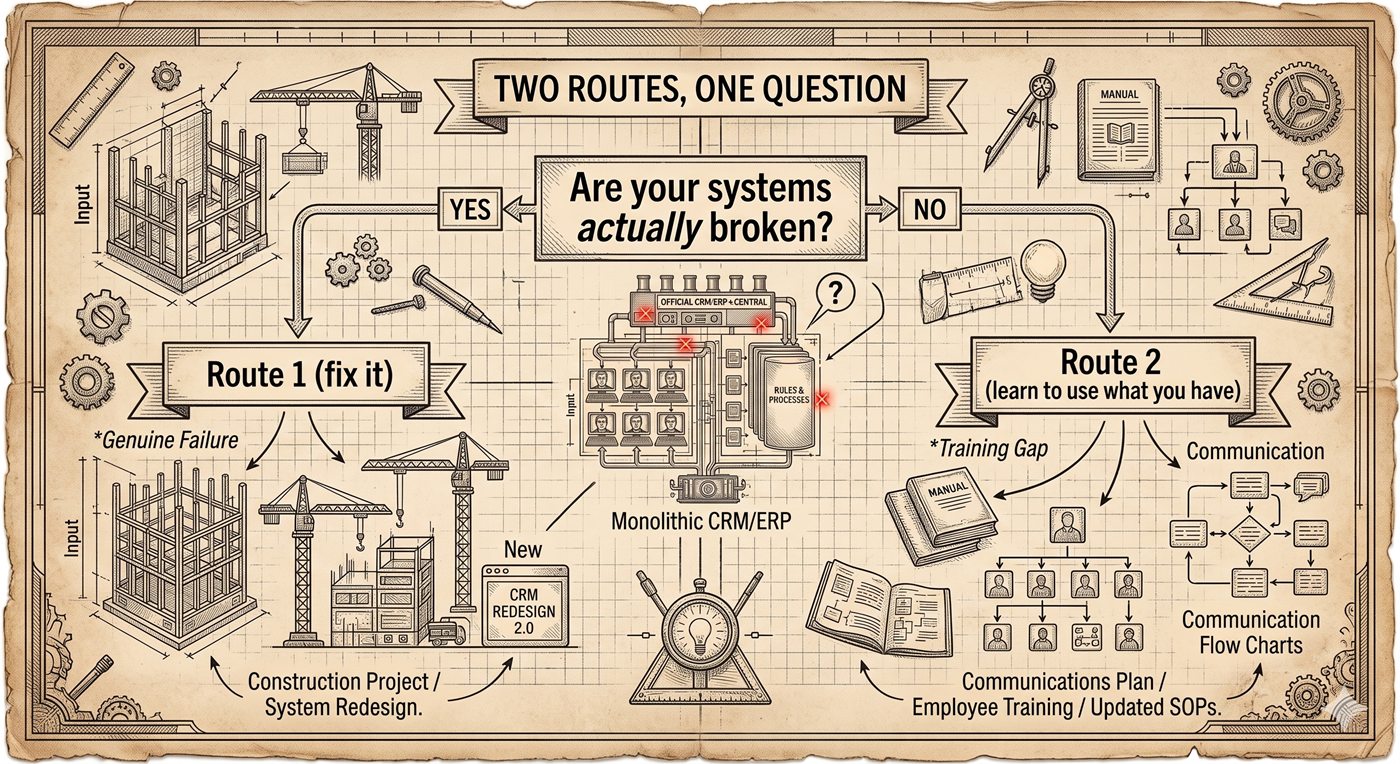
Two routes, one question
When someone sells you the agentic dream, there are really only two scenarios you could be in:
1: your systems are genuinely broken, and you need to do something different.
2: your systems work fine, but nobody knows how to use them properly. In which case, vibe-coding a replacement is a very expensive way of avoiding the actual problem.
So before you sign anything, the question worth asking is: are you driving for flexibility at the expense of fixing something that isn't broken? Or put another way, is this meant to be a construction project, or a communications plan?
The putaway example
Let me make this concrete. You can't put a pallet away because it doesn't fit in the rack. One of two things happens:
- You fix it and get on with your day.
- You fix it, document it, and update the Putaway SOP so the next person knows what to do, then complain a bit about having to update the SOP.
Path two is how you maintain standards across a business. It's slow, mildly irritating, and completely essential.
Now drop an AI agent into that moment. If the agent solves the problem on its own, with no documentation, no approval, nobody even knowing it happened, you've got a system making decisions outside of your written procedures. Each solve is a quiet reimagining of the process that came before it.
That's not the secret sauce. That's debt. And it builds silently until something breaks and you've got no idea where to start looking.
Three types of debt worth naming: technical (hard-coding quick fixes), process ("that's the way we've always done it"), and knowledge (which walks in and out the door each day). The post called LOME goes into more detail.
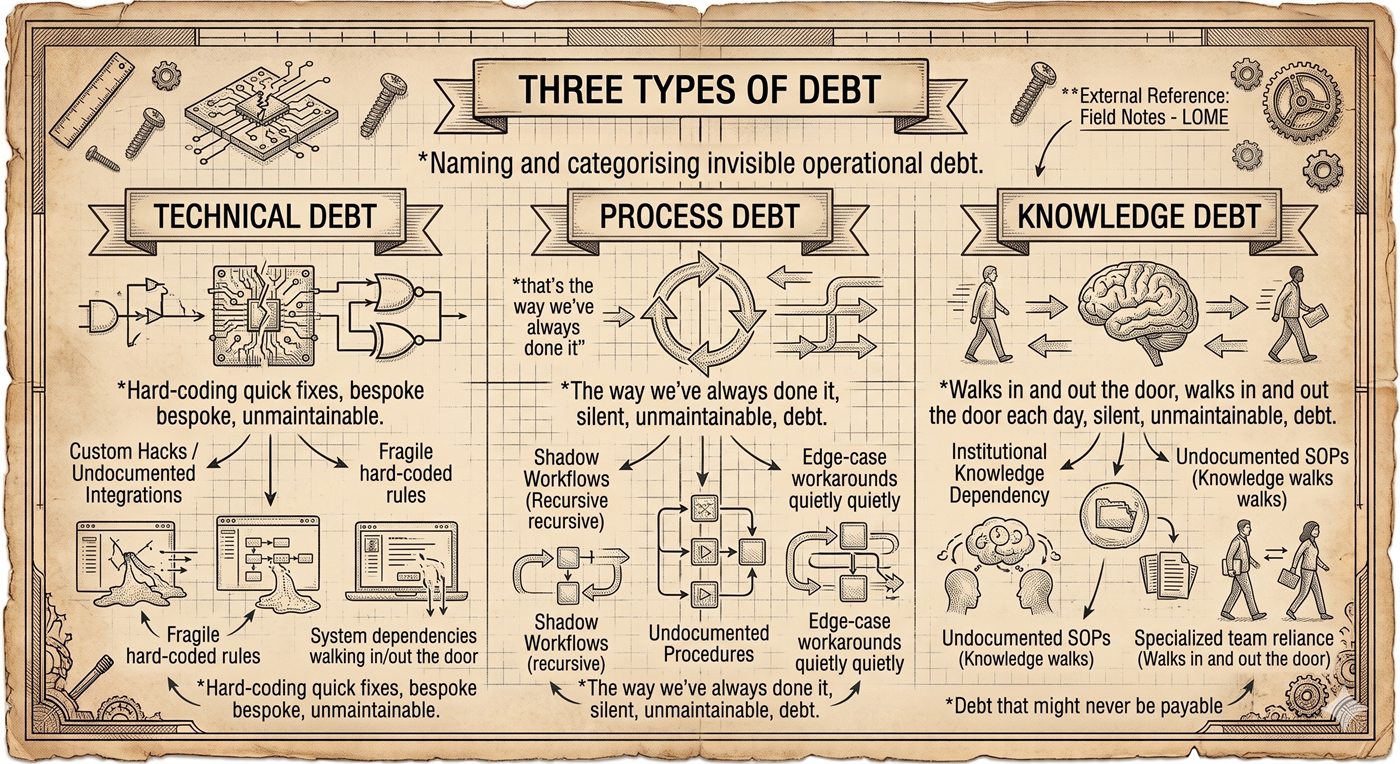
Every business already carries some mix of all three, at different depths. Vibe-coding a shiny new system on top of that doesn't clear the balance but adds to it. Bespoke means unmaintainable, because what you end up with looks like nothing else on the market. So when it breaks, the support team can't help you. Nobody can. You built something nobody else has. Which is like buying a Ferrari and wondering why it's not as reliable or cheap to fix as a Toyota.
Don't get me wrong, there are genuinely powerful ideas on the horizon. There will be providers who offer just enough flexibility, with proper integrations, built to a standard that can actually be managed and controlled.
But if someone's telling you that two years after AI went mainstream that messy, delicate work is already done… someone is lying. And if you don't call it early, you're buying yourself a debt that might never be payable.
In the meantime, the real use case of vibe coding is building an MVP to hand back to your business.
Not to rush over that, what I'm saying is: vibing will fill the gaps, not replace operating systems.
You used to go to your IT guys and say 'can we do this', to which they would respond something like "it needs to be properly scoped" or "get it approved" or simply "no".
Now you'll go to them and say "I built this, it works, can you make it accessible network wide so that other people can use it too". That's exciting, that's useful, that's a vibe.
Written with help from Claude, images created by Gemini 3.1 Pro
The insights, frameworks, and opinions shared here are entirely my own and do not represent the views of any past or present employer.